Call It, Don't Narrate It: A Three-Tier Comms Fix for Noisy Squads
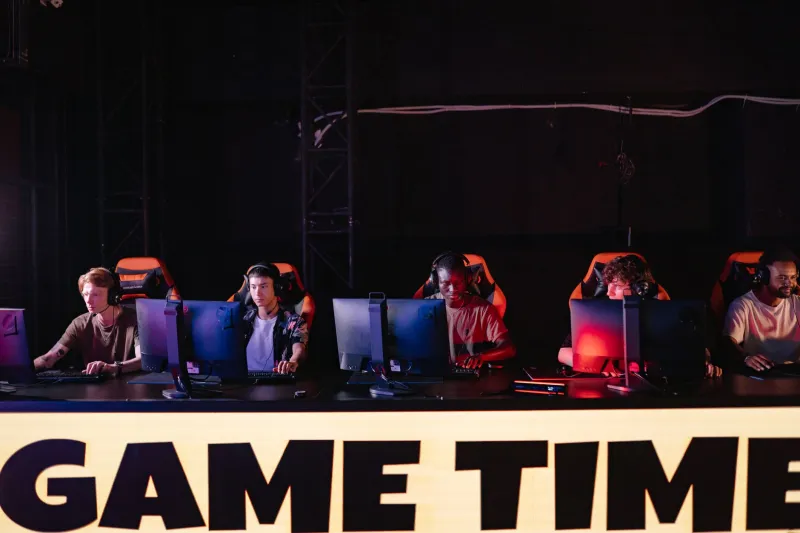
Thursday night, half nine, ranked queue pops. By the second minute of the round your Discord has become a group chat with guns: three people saying 'he's one', two people explaining where they died, and one poor soul asking if anyone has a spare smoke. Nobody is lying, exactly. But nobody is hearing themselves think either.
That is the trap for a lot of UK clans. When a round starts slipping, the instinct is to add more communication. More updates, more warnings, more mid-round essays. What actually helps is a smaller vocabulary. Not fewer words because you care less — fewer words because the squad needs a shared language that survives contact with a bad site take.
Three Calls, Three Jobs
The fix is simple: every voice comm should do one of three jobs. Info, intent, decision.
Info is what you can see or hear right now. Keep it factual and short: 'Two mid, one rotating', 'A site clear, one back', 'They have spike, forty seconds'. Info can come from anyone. It should not include a plan, a moan, or a retelling of your death.
Intent is what you are about to do. 'I'm flashing short and pushing', 'I'm holding flank, don't swing', 'I'm rotating after this smoke'. Intent lets the squad coordinate without waiting for permission. Anyone can call intent, but it has to be specific enough that a teammate can act on it.
Decision is the call that owns the next action. 'Take A now', 'Reset, play retake', 'Save, don't engage'. In most clans this sits with the in-game leader or a designated caller, but it can move if someone else is clearly reading the round. The important bit is that decision calls are rare, clear, and not argued with mid-round. Debate after the round, not during the site execute.
The shorthand is: call it, don't narrate it. If a sentence needs a comma and a backstory, it belongs in the debrief.
One Breath, One Call
A useful house rule for 2026: if you cannot fit the call in one breath, it is not a call yet. That doesn't mean everyone speaks like a robot. It means the squad agrees on the shape. Some teams use prefixes — 'info', 'intent', 'deciding' — for a week or two until the habit sticks. Others just naturally shorten. Either way, the test is whether a teammate can repeat back what changed after they hear you.
Silence is part of the system too. After a decision call, the squad should get a beat to act. Nothing kills a retake faster than the caller saying 'go' and three people immediately asking 'go where?'. Make the call, then let the play breathe.
Drills for a Tuesday Night
You don't need a sports psychologist or a ten-page comms charter. You need twenty minutes before your next scrim block.
Start with an info-only round. For the first five minutes, nobody calls intent or decisions. Just facts. It feels strange, then it feels calm. Next round, add intent. Everyone must call what they are doing before they do it, even if it is boring: 'I'm watching mid', 'I'm taking this angle'. Finally, add decisions. Only the designated caller gives them. If someone else wants to decide, they ask a question: 'Want to hit B?' That is not a decision until the caller says yes.
Second drill: the reset drill. When anyone says 'reset', everyone stops talking for three seconds. The decision caller speaks once. Everyone else listens. It sounds almost too simple, but it exposes how often clans fill silence with noise.
Third drill: the three-call review. After each round, every player names one info call they heard, one intent call they made, and one decision that shaped the round. No blame, no essays. Just evidence.
VOD Review Prompts
Watching a replay together is where the real work happens. Keep it to five prompts and a timer.
- How many voices overlapped before the first contact?
- Which intent calls came before the action, and which came after?
- Was there a clear decision call, or did the round drift?
- Did anyone narrate a death or explain a mistake while the round was still live?
- What was the one call missing from the round?
The last question is the most useful. It moves the conversation from 'you talked too much' to 'we didn't have a call for that situation'. That is a clan problem, not a person problem.
A Fair Audit
There is a temptation to turn comms into a leaderboard. Don't. The player with the most words is not automatically the best communicator. The quiet anchor who says 'two rotated' and saves the retake is doing exactly the job.
Instead, audit the round, not the person. A simple spreadsheet with four columns is plenty: useful info, clear intent, decision clarity, overlap incidents. Rotate the observer each week so nobody becomes the comms police. Look for patterns — the same two people talking over each other, the same silence after a lost pistol round, the same missing call on flank watch. Then fix the pattern with a drill, not a rant.
And give quiet players a route in. Some people need a specific job before they feel comfortable speaking. 'You own flank info this half' is easier to act on than 'be more vocal'.
What Good Sounds Like
A clean round is not silent. It is layered. 'Info: two A, one heaven.' 'Intent: I'm flashing short.' 'Decision: hit A now, don't stagger.' Then the squad moves, and the only voices are the ones that change what happens next.
That is the standard to aim for. Not fewer calls because your clan is shy, but fewer calls because every one has a job. In a UK clan scene built on Discord servers and late-night scrims, the teams that climb are rarely the loudest. They are the ones that can hear each other when it matters.