Fixture, Not Feud: Turning a Cross-Town Rivalry Into a Date in the Diary
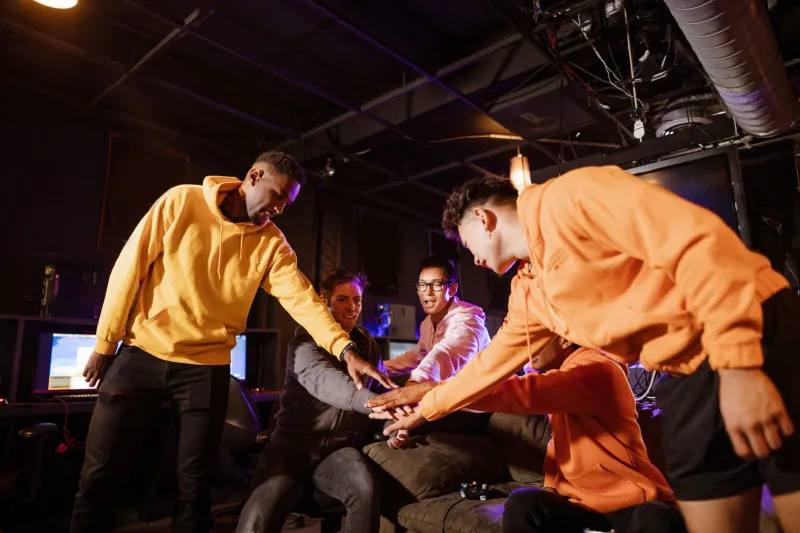
Photo: two amateur esports teams shaking hands after a match, via img.toy-people.com
Every clan has a nemesis. It's rarely chosen. It's usually the team you drew three times in one bracket, one of those games ended in a row about a pause, and now half your roster has opinions about their captain's voice.
That's a rivalry built by accident, and accidents don't keep. What keeps is a fixture: a date, a format, a both-sides agreement and a running head-to-head record. It is one of the cheapest things a UK clan can do for its calendar, and almost nobody does it on purpose.
Why a derby beats another scrim block
A scrim is practice. A derby is an event, and events behave differently. People turn up early. Someone's flatmate watches. The Discord gets busy for a night. There's a result worth posting and, crucially, a next one worth waiting for.
Scrim blocks fade in February. A fixture with a name on it doesn't, because it's not competing with your motivation — it's competing with nothing at all.
Finding a dance partner
- Similar size and level. You want a game that could go either way. A fixture you win 2–0 every time is a scrim with extra admin.
- Matching age brackets. If either side has under-18s, agree in writing that a coach or named adult from both clans is present in voice for the whole thing.
- Geography. Forty-five minutes to an hour apart keeps a LAN derby on the table — and once a season, in a hired hall with terrible chairs, is where a rivalry becomes real. Beyond that it's a coach trip.
- Complementary calendars. Don't put it against either clan's league night. Obvious, universally ignored.
- Streaming expectations. One side streaming, both sides streaming, nobody streaming — all fine, but decide before, not during.
The one-page charter
Write it down. Both leaders sign off, both servers pin it. Not because anyone's expecting trouble, but because a rule you agreed in October is much easier to apply in March than a rule someone invents mid-argument.
Cover: format and map veto, standard settings, agreed server or a home-and-away arrangement. Eligibility, including how far in advance a roster is locked. No-show policy. Comms behaviour and who's moderating. Clip and streaming permissions, both ways. And a dispute route: the two leaders talk within twenty-four hours, in voice, privately. Not in a public channel.
Ringers, no-shows and the borrowed player
A ringer is the most common way a friendly derby sours. Someone's mate who sits two ranks above plays one map, wins it, and then everybody says nothing at the time and plenty afterwards.
Kill it in advance. Rosters locked a week out. One declared emergency sub per side, named before the night. If an undeclared player loads in, the map is a forfeit — not a row, a forfeit. Rule applied, move on.
No-shows need the same treatment. Fifteen-minute grace, then the result stands. Then rebook once, without drama, because real life happens to volunteer-run clans on a Tuesday. If it happens twice with the same clan, it's a signal rather than a snag, and friendship doesn't oblige you to keep booking.
Banter with a fence round it
Banter is the point. Pile-ons are not, and the line between them is easier to draw than people pretend.
- Jokes about the game, the round, the absurd 1v4, the tactical pause that lasted nine minutes. Not about the person.
- No screenshots out of context. A group chat is not a content farm.
- No names, no towns, no schools, no 'he's from that bit of [place]' nonsense. Ever.
- Each leader moderates their own side. If one of yours crosses the line, you deal with it privately within the day, and you don't make the other clan ask.
- The working test: if you wouldn't say it across a LAN table with them sitting opposite, don't type it at half eleven.
Making it a calendar highlight
Give the fixture a name. That sounds twee and it works. Give it a shield — a real object if someone's handy, a pinned graphic if not. Alternate hosts each season. Keep a head-to-head record somewhere public.
After three seasons, 'we're 2–1 up' means something, and that sentence is the entire product. Add a short write-up afterwards: player of the derby, best round, a two-line word from the losing captain. Post it in both servers, not just yours.
If you want a grassroots angle, add a small entry fee and send it to a local cause. It gives the night a reason to exist beyond bragging rights and it reads well to anyone thinking about joining a clan for the first time.
When it stops being friendly
Have a kill switch and say so out loud at the start. If the group chat gets grim, if one player is being individually targeted, if the fixtures keep getting ghosted — pause it. Announce the pause without blame and without a paragraph of subtext.
A rivalry you can put down is worth more than one you have to survive. And if it's genuinely finished, end it cleanly: a message, a thank you, no ghosting and no subtweeting.
The whole point of a derby is that it's the fixture people put in the diary before they check what else is on. That doesn't happen by chance. It happens because someone built it and then kept showing up.