Home Advantage: Why Your Clan's Next Big Move Might Be a Postcode Away

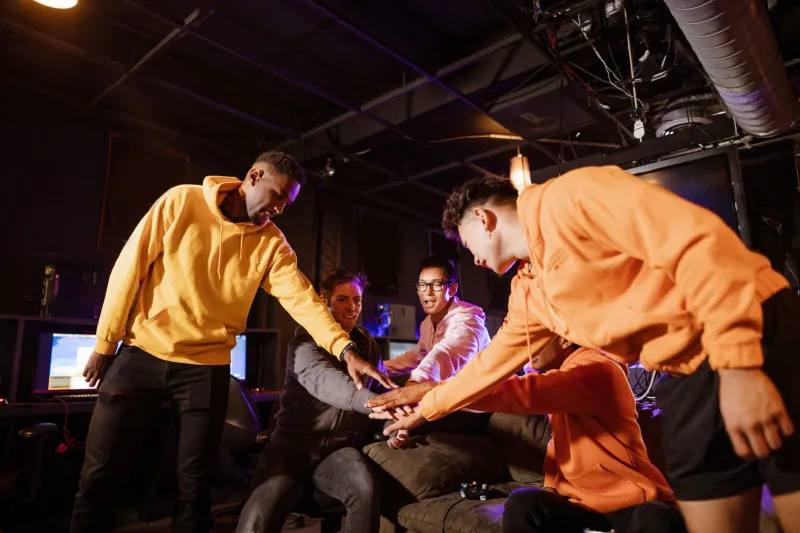
Photo: UK gaming LAN party community venue players PCs, via facts.net
There's a quiet assumption in UK gaming that if you want to be serious, you eventually point your compass at London. Maybe it's the org offices, the media folk, the occasional bar-based showmatch. Fair enough. But if your clan's entire growth plan is "get noticed by someone in the capital", you're leaving a lot of perfectly good players, venues and volunteers on the table.
Outside the M25, there are university societies running weekly fight nights, city LANs that have been going since the days of CRT monitors, regional Discord servers with more active members than some national communities, and pub-side scrim nights where the wifi is questionable but the rivalries are excellent. These aren't feeder pools for bigger orgs. They're scenes in their own right, and they can give your clan something a London address never will: a home patch.
Start With a Map, Not a Merger
The first mistake regional clans make is treating their local scene as a recruitment queue. The second is trying to absorb it whole. Neither works. What does work is a bit of boring, patient mapping.
Give yourself a fortnight to build a simple picture of what's actually happening within, say, an hour's travel of your postcode. Not what you assume is happening — what's actually on. Look for:
- University societies with public Discord servers or open LAN nights. Most welcome non-students to casual sessions, even if competitive teams are student-only.
- City LANs and community venues — church halls, community centres, dedicated esports bars, the odd bowling alley that's quietly pivoted. Check their socials for recurring dates rather than one-off events.
- Regional Discord groups that organise scrims, tournaments or just a Friday night queue. Search by city name plus the game, and don't be shy about joining quietly and reading for a week.
- Pub-side scrim nights and casual meetups. These are often the most honest gauge of who's active, because nobody turns up to a pub to be fake.
Write it down. A shared doc with venue names, contacts, night of the week and vibe is worth more than another round of Twitter scrolling. You're not looking for a takeover target; you're looking for the rhythm of the place.
The University Society Isn't a Farm Team
Here's where a lot of clan leaders get it wrong. They find a university society with 200 members, see a talent pipeline, and immediately start talking about "pathways" and "development squads". The society hears "we'd like to borrow your players and give you nothing back", and the relationship dies before it starts.
Partnering without poaching means leading with what you can offer. A few things that tend to land well:
- A friendly scrim block where your second squad plays their second squad, with no expectation of picking anyone up afterwards.
- Coaching or review sessions run by one of your more experienced players, open to society members, on a topic that isn't "join us".
- Shared admin for a one-off local cup — you bring the bracket software and the ruleset, they bring the venue and the people.
- A visible thank-you in your clan's socials when you collaborate. Regional scenes run on reputation, and being known as the clan that gives credit travels further than any recruitment post.
If someone from the society later wants to trial for your roster, brilliant. But that's an outcome, not a strategy. The strategy is being a good neighbour.
Make the Postcode a Ritual
Geography only becomes identity when it shows up in the calendar. A one-off LAN is a nice memory; a monthly fixture is a culture.
Try building one repeating local touchpoint into your clan's week or month. It doesn't have to be ambitious:
- First Thursday pub scrim at a venue that'll let you book a corner and use their wifi.
- A monthly city LAN slot where your clan commits to bringing at least one full squad, every time, even if you're not competing.
- A regional rivals night — invite two or three nearby clans to a friendly round-robin, rotate hosting, keep the entry fee at "buy your own chips".
- A Sunday afternoon casual session at a community centre, aimed at people who can't commit to midweek evenings.
Name it something local. Put it in your clan's Discord as a recurring event. Give someone the job of owning it — not because they're the best player, but because they're the sort who remembers to book the room. The ritual is the point. It gives members a reason to turn up in person, and it gives your clan a presence that isn't just a server name.
What Regional Roots Actually Buy You
A local identity makes a clan more resilient in ways that are hard to fake. When the game has a bad patch, or the roster turns over, or the Discord goes quiet for a fortnight, geography keeps people attached. You're not just the clan someone joined for a rank; you're the clan that runs the Thursday night at the place with the good chips. That's harder to leave.
It also makes you distinctive. There are a hundred clans with a clean logo and a "competitive but friendly" tagline. There are far fewer that are genuinely rooted in Leeds, or Cardiff, or Dundee, and can point to a venue, a rival and a regular night that proves it. In 2026, with so much of clan life flattened into the same handful of platforms, a postcode is a personality.
The Long Game
None of this means ignoring London or the bigger orgs. It means not treating them as the only game in town. Map your patch, partner like a decent human, and put something recurring in the calendar. The regional scene isn't a waiting room. It's the main event, and most clans haven't even bought a ticket.